Thursday, February 26, 2015

Our Aging Brains

       People 80 or over are now only slightly more than 1 per cent of the total human population, but this proportion is projected to increase almost fourfold over the next 50 years, to reach 4.1 per cent, or almost 379 million worldwide, in 2050. In 2050, 19 countries, mostly in Europe, are projected to have at least 10 per cent of their population aged 80 years or over. Aging is no longer a personal or family issue: it is a globalizing phenomenon that is going to influence the lives of millions to come.


       What are the first few things that come to mind when you think about aging? Or of the elderly? Dementia? Blurred speech? Or the slowness in processing information and learning? All of those issues are the result of the atrophy of the aging brain, the gradual dying of grey matter and the shrinking of brain volume. By the time we are eighty, our currently growing brains would have lost at least 15% of their grey matter, shrunken to size of those of two or three-year-olds, and lost 40 percent of its dopamine function. Even more disheartening is the inevitable loss of the neural network of connections in our brain, the “dendritic trees,” that allow a single neuron to be connected to a thousand others: by the time we are old, the "tree" would have shrunken to 3/4 of its original magnitude. What those changes to the brain cause is the weakening of the aging population's sensory detection, motor (due to the failing dopamine system), memory retention, storage, and retrieval abilities.
       The aging baby boomers' fear of those horrifying effects of brain atrophy and the global aging of human population prove to be great news for publishers, vitamin companies, and computer game designers. But despite the recent explosion of technology and dietary supplements that companies claim to alleviate the effects of aging, according to Elizabeth Zelinski, a gerontologist at the University of Southern California, “There’s no evidence that anything works.” Even more discouraging is what neuroscientist Eric Kandel, a Nobel Prize winner in medicine, have to say about aging. When asked how long it will be before people achieve some reasonable understanding of how memory actually works, he replied, “a hundred years.” A hundred years might not seem like a long time in the history of medicine, but by then, most of us sitting in the classroom together would have been long dead.
       But on the brighter side, a study conducted by Neuropsychologist Yaakov Stern of the Columbia University College of Physicians and Surgeons shows "that more 25 percent of people who function perfectly normally while alive in old age have brains that show serious signs of Alzheimer’s in autopsy," and "people with more education have lower rates of dementia." The study demonstrates that even as the "hardware" of our brain break down, there is definitely the possibility to maintain the brain's function by improving its "software" through certain ways. But in the meantime, all there is to our advantage in combating the effects of aging is "some combination of luck, good genes, and a healthy lifestyle." 

possible research questions:
1. What is the mechanism that is allowing people with obvious signs of Alzheimer's to function normally in everyday life?
2. What defines the "normal" functioning relative to age?
3. What encompass the healthy lifestyle? Are there any evidence that shows certain practices as being able to alleviate the negative effects of aging?

sources:
http://discovermagazine.com/2012/oct/16-brutal-truths-about-the-aging-brain
http://www.un.org/esa/population/publications/worldageing19502050/pdf/90chapteriv.pdf

Sunday, February 22, 2015

A Surprising Generation Gap


A pretty surprising study has just come out from UCLA. It seems that the generation gap just got wider and not in a way that one would typically expect. College freshmen are actually drinking, partying and even socializing less than the generations that came before them.

In 1987, 74% of college freshmen reported drinking alcohol on a regular basis. Today that number has dropped to 33.5%. The study also showed that students are spending half the time hanging out with friends than students did in 1987. 8.6% of college freshman today say they spend more than 6 hours a week partying. In 1987 that number was 34.5%. Students are now spending more of their time studying than socializing and partying.

There are many explanations that could explain these drastic changes. One being the rise in social media. Students are now spending more time on sites such as twitter and Facebook which takes up much of their free time. Instead of socializing with others in person, students are now using the intranet.

College is also seen as much more serious today than it has in the past. In today’s world we are taught that in order to get a good job you need to not only go to college but you must also go to graduate school. Getting into Graduate school can be very competitive causing students to stress and work extremely hard during their undergraduate years. Graduate school wasn’t seen as necessary in previous generations as it is today. Today students see college as another step in life, not as an end to their education.

More students are also feeling more depressed today than they were only 6 years ago. The number has risen from 6.1 % in 2009 to 9.5% today. This factor may also play a part in the decrease of socializing. Students are too stressed out to socialize.

Possible Research Questions
What is the association between depressed feelings and hours spent socializing in a week?
What is the association between a student’s plan to attend graduate/medical school and time spent socializing in a week?

Sources
http://america.aljazeera.com/articles/2015/2/6/college-freshmen-drink-less-and-worry-more.html


Thursday, February 19, 2015

How Legitimate Is The Freshman 15?


    The Freshman 15 is a term that practically every student hears before entering college. Being away from home and on your own can be very stressful especially when students must balance a rigorous education and all of the extra curricular opportunities. One way many students handle this stress is by eating it away, whether they are conscious that they are doing it or not. As a result, the term "Freshman 15" was coined, meaning students generally gain 15 pounds their freshman year. However, many are starting to question if this is a real thing.


      A study done by Ohio State University (unfortunately, Go Blue!) was aimed at proving whether or not the Freshman 15 was a myth. They found that students on average gained about 3 pounds their first year of college. Interestingly enough, less than 10% gained 15 pounds and over a quarter of their subjects actually lost wait their first year. They did find, however, that students did tend to gain wait throughout the course of their college careers. From freshman year to graduation students gained on average 7-13 pounds. They found the only thing that had a consistent cause of weight gain was significant alcohol drinking. There was also relatively similar weight gain for non-college students of the same age. Overall it appears that the Freshman 15 is a myth, although there is truth in students gaining weight throughout the whole course of their college careers.

   
     Some questions to consider:
Does the belief in the Freshman 15 cause unnecessary stress about food consumption and body appearance for these new college students?

Do you think the Freshman 15 perception can be blamed for newly developed eating disorders in college?

And finally, do you think the term 'Freshman 15" should be cut out of our language
or should it remain to remind students to stay healthy as they venture out on their own for potentially the first time?


Source: http://www.huffingtonpost.com/2013/09/06/freshman-15-weight-gain_n_3860832.html


Are College Students More Susceptible to E-Cigarette Usage?


With advertisements such as "Pure flavor, nothing but vapor"or "Rise from the ashes™", the overall mindset around e-cigarettes is that they provide an outlet for past cigarette users that is healthier, but also a loophole to cigarette bans within public spaces. As a freshman at the University of Michigan, I am always amazed to see students using e-cigarettes instead of traditional cigarettes as it is confusing to me why they use them at all when either way they are going to expose themselves to unhealthy carcinogens. I personally am educated on the health risks that are involved in the use of e-cigarettes, but is this the case for the majority of college students? Is it possible that there is a certain level of susceptibility to fads such as e-cigarettes within the college age cohort?

A web-based study conducted in New York on four different college campuses found that roughly 85.8% of college students agreed that e-cigarettes are healthier/better than traditional cigarettes. The study also found that, across the board, college students who partake in behaviors such as drinking, drug usage, or traditional cigarette usage are at a higher rate of susceptibility to become users of e-cigarettes. Although these data paint a picture that it is alright that there is a higher percentage of students converting their behavior over to the "healthy" alternative, this is simply not the truth. This statistically higher percentage of e-cigarette usage is manifested to the order of 5-20 times greater, a staggering figure that should not exist.

The data surrounding this issue is shocking not only because the incidence is so much higher within these groups, it is shocking in the fact that the majority of college students statistically fall within these high risk groups. This knowledge therefore implies that the average college student is at a very high risk of susceptibility to e-cigarette usage, and the health implications for this cohort as a result of this susceptibility are not yet able to be studied.

Questions for Reflection:

If college students are so susceptible to e-cigarette usage, how does the presence of a "vape shop" near to campus affect the number of students who use such products. Also, do these shops use the same tactics as e-cigarette advertisements by overplaying the "benefits" and completely downplaying the large of number of health risks present in order to coax students into buying into the "hoax" that is the e-cigarette industry?

Sources:
Risky behaviors, e-cigarette use and susceptibility of use among college students
http://www.blucigs.com/products/
http://www.tobaccofreekids.org/ad_gallery/P150

Chiptole: Is it really the healthier fast food option?


In the last decade, people have been bombarded with statistics about increases in obesity in both children and adults. In earlier years, the premature data on obesity made this epidemic seemly unrealistic for many parents and children who live the United States. As these statistics have steadily increased, so has the awareness of this epidemic through shows and documentaries. Specifically, the statistics about obesity and how fast food perpetuates obesity was revealed through the documentary Super Size Me. This documentary was released in early 2004 and later spread throughout classrooms in the United States.  Morgan Spurlock, the main character and director, went to McDonald's in the United States and consumed only McDonald's for 30 days. This documentary showed the raw effects of fast food and how it can physically, mentally, and behaviorally affect the average person.
Although Super Size Me raised awareness to both parents and children in the United States about chain restaurants such as McDonald’s, Wendy’s, and Burger King many of these same people face a new challenge. Chipotle, one of the fastest growing fast food chains, is just as trendy as McDonald’s was in the early 2000s. This restaurant is popular among both adults and young adults, but the nutritional facts and quality of the food seems to be extremely deceptive.  According to the New York Times, the typical Chipotle order contains about 1,070 calories. This average constitutes for close to half of one person’s recommended calories. Although there are options that are fall under this caloric value, 25-50% of the meals contain between 855-1070 calories because of meat and additional toppings. Additionally many of the more popular dishes contain high levels of sodium, especially their salsas.
While it seems as if more people are aware of the consequence regarding McDonald’s many do not recognize the same dangers in over consuming other chain fast food restaurants such as Chipotle and Qdoba. Raising awareness to the caloric value of all fast food restaurant dishes can help to contribute to a greater awareness of unhealthy food.
Do you think that restaurants such as Chipotle are healthier than other fast food restaurants? What constitutes “healthy food” for you? How popular is Chipotle on the campus of the University of Michigan? 

http://www.nytimes.com/interactive/2015/02/17/upshot/what-do-people-actually-order-at-chipotle.html?abt=0002&abg=1

Thinspo: Good or Bad?


Thinspo, short for thinspiration, has crept up everywhere in the media, from motivational posters to covers of magazines.  Thin-clad women in scanty clothes have attempted to motivate others into getting skinny. Thinspo refers to the images that women post in order to inspire themselves and others into getting thin. These women, however, are always excessively thin and over-sexualized, portraying only a small population of women around the world.

Thinspo may motivate some women to improve their lifestyles, but it also promotes eating disorders and drastic fitness regimes. The movement is dominated by anorexics who praise their thinness and find nothing wrong with the harm they are doing to themselves. They have rallied around thinspo as a kind of support group for those who have no interest in recovery.

Thinspo is available to the public, including the young, adolescent teenagers who are vulnerable to body image issues.  With overly thin women dominating the advertisement industry, childhood insecurity is rising, which can lead to isolationism and mental health instability.  Thinspo is poisoning their minds into thinking that they must be thin to fit in. Girls around the world are starting to diet for all the wrong reasons, saying they want to get thin so “I can see my ribcage” or “so I can weigh under a 100 pounds”.  What they do not understand is that everyone is meant to be a different size and shape and we should embrace it.

With the current frenzy over getting healthy and fit, people are resorting to drastic behaviors in order to become “thin”. Women are convinced that being thin is the norm, when only a slim proportion of people are in fact that thin. Anorexia and bulimia are on the rise, thanks to all the attention on thinspo.  Thinspo is far from healthy and the attention should be on more conventional methods for getting fit like a healthy diet and daily exercise.

Instagram, Pinterest, and Tumblr have all disabled pages and posts that aggregate photos and quotes that are labeled as “thinspiration”.  Twitter, however, refuses to acknowledge the harm thinspo is creating, claiming that it falls under the freedom of expression. Should thinspo be banned universally? What can we do to make this happen?

References:

http://www.theatlantic.com/sexes/archive/2013/05/an-epidemic-basically-a-conflicted-weight-loss-blogger-on-thinspo/275671/
http://abcnews.go.com/Health/thinspo-internet-content-promotes-anorexia-experts/story?id=18622088
http://www.ibtimes.com/thinspiration-debate-over-pro-anorexia-thinspo-pictures-pinterest-tumblr-heats-after-ban-moves

MORE! MORE! MORE!


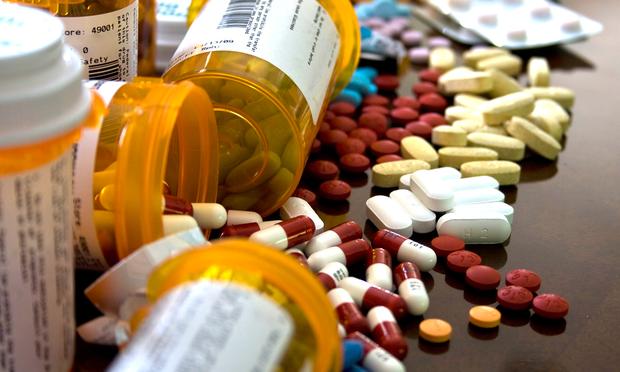
As new breakthroughs in the health system occur, people are becoming more and more dependent on these advances. Nowadays people turn to medication to treat their sickness or discomfort. People are becoming too reliant on medication and no according to CNN a third of Americans refer to "alternative medicine" which is basically medicine not suggested by the person's caretaker for use. There is a lot of controversy when talking about medication. People believe that instead of relying on medication, patients need to rely more on their ability to recover from distress or discomfort, so that it does not take away from the person.

I think our reliance on medications needs to be controlled. People are placing their trust in these drugs and now they're not even consulting their physicians. Also while I was observing a social worker in the cardiac transplant section of the University of Michigan Hospital, there was a patient who snuck in a bottle of painkillers, but eventually got caught. This is a perfect example of how dependent we are on drugs, that we do not trust that we can take care of our bodies better than certain pills. I’m not saying to completely eradicate the use of medication because we obviously need it, but we should use it more of a last resort. People should have the confidence in their bodies and themselves to overcome certain health problems rather than quickly taking some pills off the counter. It is important to look at the body holistically in order to heal it.

Questions to ask:

Do you think people are becoming too reliant on medications? If so do you think its a bring problem or something people are just being stingy about. If not how would you go about finding alternative methods of healing?